Collapsing the Drivetrain Into the Rim
MIT's Senseable City Lab popularized the modern self-contained "smart wheel" concept in 2009 with the Copenhagen Wheel: a bright hub shell housing a brushless DC motor, lithium battery ring, torque sensor, and wireless controller that turned an ordinary steel bicycle into a pedal-assist hybrid in ten minutes.
Fifteen years on, that architectural instinct has branched across light and medium mobility. Axial-flux and outer-rotor radial-flux motors from specialists such as Elaphe, Protean Electric, and Grin Technologies eliminate chains, belts, and bevel gears. Because electromagnetic force acts at a wide radius near the rim, direct-drive hubs deliver instantaneous millisecond torque vectoring—allowing a four-wheel platform to correct skids ten times faster than mechanical anti-lock brakes.
-
90-Degree Steer-by-Wire Corner Modules
Platforms like Hyundai Mobis e-Corner and Schaeffler's intelligent corner modules combine in-wheel propulsion with 90-degree electric steering actuators, allowing parallel crab-parking and zero-radius tank turns in tight urban loading bays.
-
Holonomic Omni & Mecanum Wheels
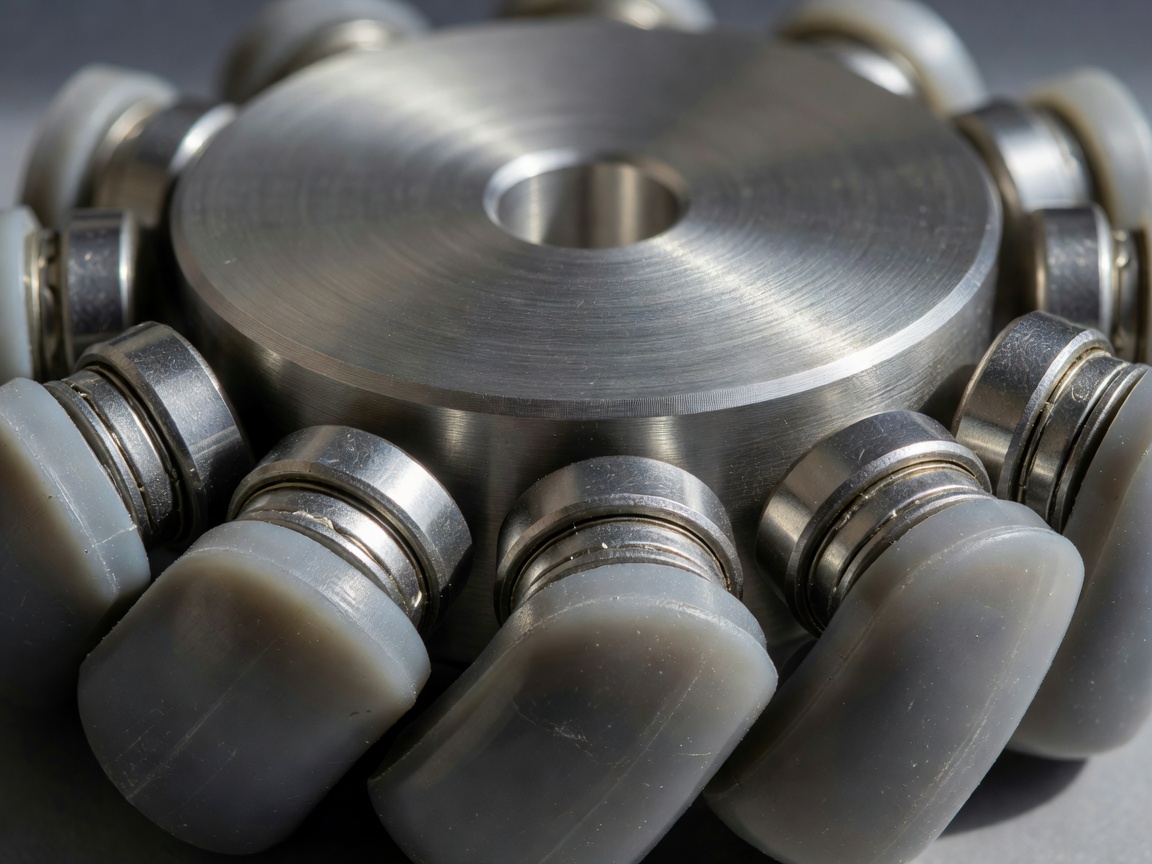
Deployed on WHILL powerchairs and warehouse tugs: segmented passive rollers let the front wheels pivot laterally without caster-swivel scrub radius, dramatically shrinking turning circles in elevators.
-
In-Wheel Loop-Spring Suspension (Loopwheels)
Replacing rigid metal spokes with three tangential carbon-composite C-springs absorbs curb shock inside the wheel hub itself—valuable on folding commuter bikes and wheelchairs where fork travel won't fit.
-
Shape-Memory Alloy (NiTi) Mesh Tires
Adapted by The SMART Tire Company from NASA Glenn Research Center rover prototypes, superelastic nickel-titanium wire meshes deform reversibly up to 8% strain without air pressure—currently entering premium bicycle pilots.
The Physics Penalty: Unsprung Mass and Pothole G-Loads
Why doesn't every passenger vehicle or cargo trike pack its entire battery and inverter inside the wheel? The answer is Newton's second law applied below the suspension spring. Anything bolted inside the wheel—copper windings, neodymium magnets, silicon-carbide MOSFETs—experiences raw road impact before shock absorbers can cushion it. Striking a sharp pothole at 35 km/h subjects hub electronics to transient accelerations exceeding 50 g.
Heavy wheels also resist changing vertical direction, causing the tire to skip momentarily off washboard asphalt (compromising grip) and transmitting thudding harshness into the cabin. Successful smart-wheel designs manage this trade-off in two ways: either operating below 25 km/h (where kinetic shock stays modest, as on e-scooters, cargo bikes, and delivery carts) or stripping the battery out of the rotating hub into the sprung deck while using lightweight axial-flux stators sealed to IP67/IP69K standards against salted winter slush.
"Spherical magnetic-levitation ball tires will let vehicles spin 360 degrees at highway speeds."
Viral concept renders such as the Goodyear Eagle-360 show untethered rubber spheres held under chassis fenders exclusively by magnetic levitation.
Air-gap magnetic suspension fails emergency braking shear loads.
Maintaining an electromagnetic air gap capable of resisting a 1g emergency panic stop or pothole strike requires colossal continuous coil current and supercooling, while road grit trapped between sphere and magnetic housing acts like industrial sandpaper.